blog.backToblogssss


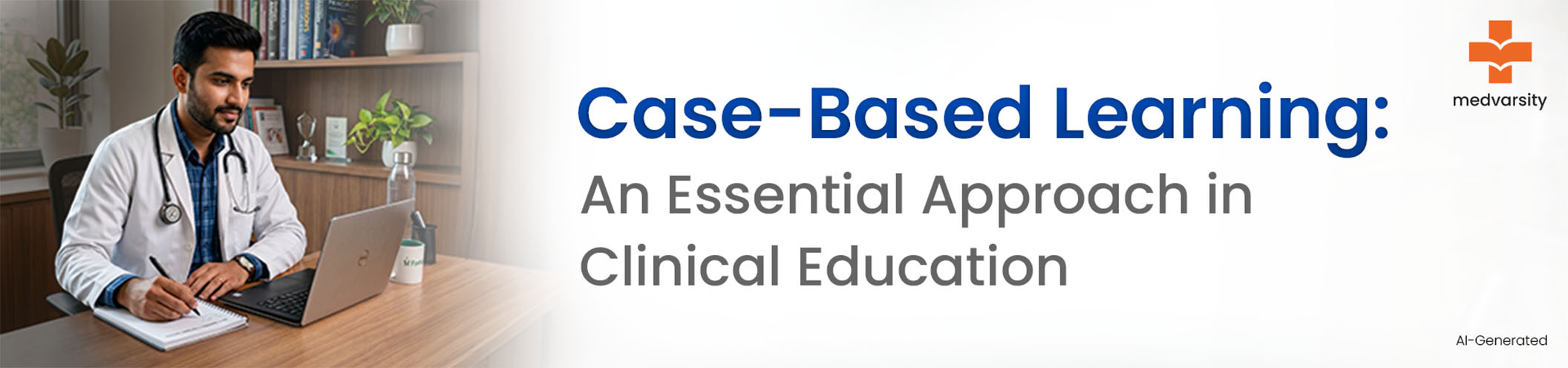
Case-Based Learning: An Essential Approach In Clinical Education
Susmitha GMay 14, 2026
18 viewsThe medical textbooks shows classic presentation, but the human sitting across from you is a mess of comorbidities, lifestyle complications, and non-compliance. In that moment, your gold-medal-winning memory of the Krebs cycle feels pretty useless, doesn't it?
The truth is, this clinical gap is where most careers plateau. If you want to move from being a doctor who just follows orders to a specialist who actually leads the ward, you have to change how you learn. That’s where Case-Based Learning (CBL) comes in. It’s not just a buzzword; it’s the only way to survive the reality of 2026 healthcare.
Forget the Lectures—Let’s Talk About Real Patients
Standard medical education is obsessed with the "what." What is the dose? What is the symptom? But real-world medicine is obsessed with the "how." How do I treat this specific patient who has both heart failure and chronic kidney disease without crashing their vitals?
Learning Through the Unorganized Reality
Case-Based Learning flips the script. Instead of a dry PowerPoint on Pathophysiology, you get a scenario. Meet Mrs. Rao. She’s 68, she’s breathless, and she has a history of poorly managed hypertension. You aren't just reading about a condition; you are virtually standing in front of her. This shift from theory to simulation is where your brain actually starts to think like a consultant.
The Medvarsity Edge: Why We Obsess Over the Case-Based
At Medvarsity, we realized early on that doctors don't need more information, they need application. Our fellowships are built around this. We’ve designed our 30+ specialty courses around case-based learning concepts. Because at the end of the day, your patient doesn't care about your exam scores; they care about your clinical judgment.
Why Specializing with CBL is a Career Necessity
The medical landscape is moving faster than ever. If you aren't upskilling, you’re actually moving backward. But why should you choose a Case-Based Fellowship over just reading a journal?
Every veteran doctor has it, that sixth sense where they just know something is wrong before the lab results even come back. That isn't magic. It’s the result of seeing thousands of cases. CBL fast-tracks this process. By working through hundreds of high-fidelity clinical cases in our programs, you are essentially downloading a decade of experience into a couple of years.
Medicine is a high-stakes game. The "learn as you go" method on real patients is stressful and, frankly, risky. Specializing through a case-driven model lets you make those initial diagnostic errors in a safe, mentored environment. You learn from a glitch in a simulation so that you are flawless in the ICU.
Upskilling shouldn't happen in a vacuum. It needs a human touch. That’s why our Case-Based approach is paired with two critical components: mentorship and observership.
The ROI of Being the Expert in the Room
Let’s talk about the elephant in the room: career growth and finances. The Generalist Plateau is real. MBBS doctors are everywhere, but specialists are rare.
- Consultation Authority: When you specialize in something like Cardiology or Critical Care through a Fellowship, you aren't just another name on the board. You are the person people refer cases to.
- Higher Earning Potential: Expertise pays. It’s as simple as that. Specializing allows you to command higher fees and secure roles in top-tier private hospitals.
- Future-Proofing: AI might be able to suggest a drug dose, but it can’t handle a complex, multi-system case with the empathy and intuition of a human specialist. CBL prepares you for the stuff machines can’t do.
If you feel like your daily practice has become a routine of mild symptoms and referrals, you are ready for the next level. The world doesn't need more doctors who are good at taking tests; it needs clinicians who are master problem-solvers.
Upskilling through a Medvarsity Fellowship isn't about getting another piece of paper to hang on your wall. It’s about changing the way you think, diagnose, and treat. It’s about becoming the doctor you actually wanted to be when you started this journey.
FAQs (Frequesntly Asked Questions)
1. Is Case-Based Learning harder than regular courses?
It’s not harder, rather it’s more engaging. Instead of falling asleep to a lecture, you are actively solving a puzzle. It’s actually more intuitive for doctors because it mirrors how we work in real life.
2. How much time do I need to commit to a Medvarsity Fellowship?
We get it, you are busy. That’s why our digital modules are self-paced. You can dive into a case during your break or after a shift. The clinical observership is also scheduled to be as flexible as possible.
3. Will this really help me in my daily OPD?
100%. The cases we choose are the ones you see every day, the tricky ones, the "borderline" cases, and the ones with complications. You willl find yourself applying what you learned the very next morning.
4. Who are the mentors?
Our mentors are senior consultants and specialists who hold years of expertise in their respective fields. These are professionals who understand the current Indian healthcare landscape and the specific challenges you face.
5. Is the certification globally recognized?
Our fellowships are accredited by prestigious global bodies, depending on the course, which adds massive weight to your CV whether you are staying in India or looking abroad. Our fellowship courses are globally recognized.
6. Can I specialize in more than one area?
Many of our students take sequential fellowships, for example, Internal Medicine followed by a specialized path like Diabetes. It’s a great way to build a very " robust" clinical profile.